Showing posts with label reading. Show all posts

Thursday, September 30, 2010

Daily Thoughts 9/30/2010 (reading, libraries, well being, outsourcing)

Poster of book exhibition, by Vladimir Taburin, 1910,
http://www.plakaty.ru/posters?id=1685 , Wikimedia Address
http://commons.wikimedia.org/wiki/File:TaburinPoster.jpg 

Daily Thoughts 9/30/2010

Today has been a quiet, peaceful day.  I did some more weeding in the oversize books, some spot checking in 300s, and checked on the shifting in the storage area.  I am focusing on the 800s in storage right now.  Things are moving along nicely. I like to keep track of the small details so things go right.

We have a program today by John R. Howard who is reading Faces in the Mirror, Oscar Micheaux and Spike Lee  from 6:00 p.m. to 7:30 p.m..  John R. Howard used to be on the library board.  We picked up a few of Spike Lee's movies; Do The Right Thing and When The Levees Broke as well as the videocasette for  Body and Soul by Oscar Micheaux.  We also picked up a few books on their films as well. 

Last night, I read Well Being The Five Essential Elements by Tom Rath and Jim Harter.  This is a study by the Gallup organization on the elements of what makes a person well.  The five elements are career wellbeing, social wellbeing, financial wellbeing, physical wellbeing, and community wellbeing.  This book speaks volumes about how the general wellbeing of Americans is slipping.  We are 19th in overall wellbeing.  It also describes how poverty causes more than a lack of monetary wealth.   It also increases the amount of pain people are in because of lack of healthcare, and limits physical safety.  There are some interesting insights in this book.  A lot of the interviews in this book were done in person because the book has international coverage where many people do not have phones or electronic equipment.

On the train home, I started on The Glamor of Grammar A Guide to the Magic and Mystery of Practical Enghlish by Roy Peter Clark.  This is a surprising book.  The author manages to make grammar fascinating.  He argues that one should be immersed in language.  Grammar is a tool to improve language, not a prescriptive or descriptive device.  His argument is very likable.  In chapter 3, he asks the reader to adopt a favorite letter.  I chose Z because it reminds me of the Zizzer-Zazzer-Zuzz in Dr. Seuss's A B C.

Web Bits

From the Wall Street Journal, an article that argues that the internet is killing superstores, but will allow small stores to flourish. http://online.wsj.com/article/SB10001424052748703440604575496290813315552.html
 This is an interesting idea. Maybe, we might see some of the specialty bookstores come back.

The New York Times article about outsourcing public libraries.  http://www.nytimes.com/2010/09/27/business/27libraries.html?pagewanted=1&_r=1  I find this to be a little bit disturbing.  There are two reasons.  The first is sucking money out of the local community by sending it to a corporation that is not necessarily part of the local community.  I would think this would have a similar effect to Walmart.  You might get cheaper services, but the money does not go back into the community.  The second problem is one of transparency.  Libraries are public institutions run by the government where you can see how the money is spent.  LSSI is a private corporation which does not release its financial figures.   This is very short term oriented thinking.

Sunday, April 11, 2010

Daily Thoughts 4/11/2010

Bust of Nathaniel Hawthorne (1804–1864) by Jonathan Scott Hartley (1845-1912). Front portico, Library of Congress Thomas Jefferson Building, Washington, D.C, 2007, Carol M. Highsmith Photographer, Listed as Public Domain on Wikipedia.


Daily Thoughts 4/11/2010


I did not go to the Museum of Comic and Cartoon Art festival this weekend. Every day life caught up with me. Laundry, shopping, reading Plato and a Platypus Walk Into a Bar. Watching The Hurt Locker on dvd.

Wednesday, April 7, 2010

Daily Thoughts 4/7/2010

Suggested credit line: Library of Congress, Prints & Photographs Division, Carl Van Vechten collection, [reproduction number, e.g., LC-USZ62-54231], James Branch Cabell, Public Domain


Daily Thoughts 4/7/2010

Today has been another quiet day. I changed the display for the storage books from fairytales to books on the west including westerns. People read a lot less western and pioneer literature. Zane Grey, Max Brand, Owen Wister, and Louis L'amour are not as popular as they used to be.

I also had some time to read Publishers Weekly, Booklist, and Library Journal. The idea of the agency is kind of interesting. The publisher determines the price for the ebook, then the retailer gets a fixed percentage of profit, 30%. It puts more power into the producer of the work; the author and the publisher. It is a rather interesting idea.

We also had a collection development meeting. I have to check out the price for a docking station for ipods, iphones, kindles, and other devices for Overdrive. I'll probably do that on Friday.

Things are moving along steadily with the shifting projects. We have to look at labeling the shelves for the paperback fiction.

Things have been a little tight lately. We are starting to look at different vendors. http://www.librariansyellowpages.com/

We are going to have a poetry open microphone on Saturday from 2-4 p.m. I have learned a few things. The first thing is to have a sign up sheet beforehand. The second thing to do is to call the people on the signup sheet a couple of days before the event to confirm people are coming and ask them to bring a friend. I have to think of which poetry I am going to read. I think we may open with people introducing themselves and asking people to make a short statement of why they are here. I think we will have a few poets from the community this time which should make it a a little bit better. Also we may have people from the senior center.

Thursday, March 25, 2010

A Reader on Reading by Alberto Manguel


A Reader on Reading by Alberto Manguel


This is a collection of short essays by Alberto Manguel. Alberto Manguel wrote The Dictionary of Imaginary Places and was an editor for many years. He muses on his own identity as a reader by talking about many personal issues on reading. He has an essay of the Legend of the Wandering Jew as a reader as well as comments on Jorge Luis Borges defense of Jewish culture. The author is Argentinian and pulls from the South American literary tradition.


He opens many of the essays with a quote from Alice in Wonderland or Through the Looking Glass and a picture from one of these books. This adds an inquisitive quality to the essays. I like many of his quotes and thoughts from Borges because Borges was a librarian and a fantasist in the tradition of magical realism. The essays remind me of thoughts that might have come out of The Phantom Tollbooth or Un Lun Dun.


Most of the essays are about the the experience of reading and being a reader. I especially liked the essay on Don Quixote, entitled Time and The Doleful Knight on Pp. 182-186. I can relate to Cervantes even though I have not read him..


Alberto Manguel attempts to list the qualities of the ideal reader and the ideal writer in two separate essays. They are quite delightful, even though I would not agree with many of them. Alberto Manguel has a deep relationship with books. He has a personal library of some 30,000 books. He wrote about this in an earlier book, The Library At Night.


There is also some discussion of technology in this book. The essay, Saint Augustine's Computer on Pp. 187-198 describes the differences between the printed word and the word on the screen. They are quite significant. He claims the printed word is less ephemeral and easier to subject to deep analysis than what appears on a computer screen.


Some of the issues in the book are quite political. Alberto Manguel grew up under Peron's government. He describes many of the problems with literature, writing, and reading that occur under repressive regimes. He also discusses Che Guevara and his impact on literature. This makes for some interesting, if a bit pointed commentary.


There is a lot to recommend in this book. It has a well done index, a very extensive bibliography, and a nice feel to the book. The book is set in Fourier Type and is quite easy to read. It is printed by Yale University Press. It is an excellent book that is well worth reading.

Monday, December 21, 2009

Daily Thoughts 12/21/2009

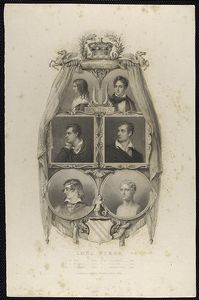
Lord Byron. Digital ID: 483280. New York Public Library
Lord Byron, Finden, Edward Francis, 1791-1857 -- Engraver, 1838

Daily Thoughts 12/21/2009

I am glad that Publishers Weekly opened their website so it is no longer a subscription website. It makes my job much easier. They have a very nice list of the Top Books of 2009 up right now. They also list religious reviews which should be useful as well as comics bestsellers. http://www.publishersweekly.com/article/CA6704595.html

Fast Company Best Business Books of 2009. I like the slideshow format. I am definitely going to read Viral loop : from Facebook to Twitter, how today's smartest businesses grow themselves / Adam L. Penenberg. http://www.fastcompany.com/pics/best-business-books-2009?partner=homepage_newsletter

I feel like reading something a little silly like Sense and Sensibility and Sea Monsters by Jane Austen and Ben H. Winters. It looks entertaining. Read Street blog has a book review of Jane Bites Back by Michael Thomas Ford where Jane Austen is a vampire. http://weblogs.baltimoresun.com/entertainment/books/blog/2009/12/a_jane_austen_spinoff_that_doe.html

I have four books which I plan on reading on my desk, Grandville A Detective Inspector Lebrock of Scotland Yard Scientific Romance Thriller by Bryan Talbot. It is a beautifully illustrated graphic novel. I also have Sense and Sensibility and Sea Monsters as well as Thinking With Type A Critical Guide for Designers, Writers, Editors, & Students by Ellen Lupton and Think Again Why Good Leaders Make Bad Decisions and How To Keep It From Happening to You by Sidney Finkelstein, Jo Whitehead, and Andrew Campbell.

Tuesday, December 1, 2009

Daily Thoughts 12/1/2009

Library of Congress, Prints & Photographs Division, Carl Van Vechten Collection, [reproduction number, e.g., LC-USZ62-54231] Maugham, W. Somerset--(William Somerset),--1874-1965. The Razor's Edge is a great novel.


Daily Thoughts 12/1/2009

I am back from vacation today. I returned my book and checked out a bunch of items, Me 2.0 by Dan Schwabel which is about building a personal network online, Social Intelligence by Daniel Goleman, Six Pixels of Separation by Mitch Joel, Trust Agents by Chris Brogan (Chris Brogan spoke last year at Tools of Change for Publishing), Diving Into the Wreck by Kristine Kathryn Rusch, and Halo Evolution, Essential Tales of the Halo Universe ( Tobias Buckell has a story in this book.)

There are a few books which I was interested in but didn't take, Vladimir Nabokov, The Original of Laura (this is Nabokov's manuscript for his final work, it is on notecards and unfinished. Vladimir Nabokov did not want it published, but his son published it anyway after his death.) The other book which I'll probably read later is Sense and Sensibility and Sea Monsters. Sometimes, there are just too many books.

I had various things to do including updating the displays and catching up on my reading. I still have quite a bit to do. I read some of Booklist and Publishers Weekly. I also finished putting in my orders for the month of November. Tomorrow, I have to work on the display stands for the "New Arrivals" section.

On the way home, I read some of Me 2.0, Build A Powerful Brand to Achieve Career Success. The book is on personal branding. The book comes across as a bit narcissistic. Still, it has quite a bit that seems useful to say about how to market yourself as a person. There is a lot for people just entering the job market. It makes the claim that people need to have more than a resume and recommendations to succeed.

Wednesday, May 27, 2009

Fool's Gold Why The Internet Is No Substitute for a Library by Mark Y. Herring, McFarland and Company, North Carolina, c2007

Fool's Gold Why The Internet Is No Substitute for a Library by Mark Y. Herring, McFarland and Company, North Carolina, c2007


This book provides clear arguments to why the internet and also ebooks are no substitute for a physical library.


He argues against the uncluttered, unauthoritative, often inaccurate nature of the information made available on the internet. Mark Y. Herring abhors internet pornography, spam, the presence of hate sites, and plagiarism rampant on the web.


There are reminders that internet sites disappear quickly; a phenomenon called link rot and are not cited or footnoted like in books. There is an excellent set of footnotes at the back of the book with extensive, often ironic commentary.


Some of the most striking ideas were that Wikipedia is a secondary source; copyright has not been sorted by Google and the best electronic information is still in propietary databases.


I do not agree with some of his points,especially the ones on book, this book was written in 2007, so it was just before the advent of the Kindle and the expansion of many of the archives of free information on the web like wikimedia.


Also, his statements about the pure decline of reading because of the internet are starting to change. People have become much more aware of the decline in reading. This may be in part because of books like this. This is a link to the latest National Endowment for the Arts study
http://www.arts.gov/news/news09/ReadingonRise.html


This book was ironic and coherent; a strong statement against web evangelism. It gives solid arguments on why we should keep a physical library and not just turn everything over to the internet.


Mark Y. Herring, the author, is the Dean of Library Services at the Dacus Library, Winthrop University in Rock Hill, South Carolina. He has written extensively for Library Journal and other academic publications.


Tuesday, May 12, 2009

Daily Thoughts 5/12/2009


Promotional poster for Baum's "Popular Books For Children", 1901


Daily Thoughts 5/12/2009


I tried to start reading two different novels on the train. The first was an advanced reading copy of How To Rob An Armored Car by iain Levinson. It bored me. The premise was a group of potheads in dead end jobs turn to crime. I could not find much sympathy with the characters. The second book I tried to read was Daemon by Daniel Suarez. This is a near future thriller. I got through the first chapter then I got distracted by the characters. There were too many plot threads to make the writing very coherent and they did not mesh very well, so I put it down. I was hoping I would have something to read on the train in the morning but, I guess, I will have to pick up the New York Times instead and read it on the way to work tomorrow.

I had a typical day today. I spent some time in the morning weeding the 700s. I also plan to shift the books in the 700s around to create some space tomorrow. We put in a whole new set of baskets for the new book display area. We are waiting for two more slat wall panels. Then we will be finished redoing the new books display area. It looks a lot nicer than before.

We had Westlaw come over to do some training on the new interface for Westlaw Patron Access. The training was kind of interesting. Westlaw has designed a new set of drop down menus and directories that is more user friendly for the public to find law material. The search engine reminds me of Google now. The training took about an hour and a half.

I also spent time this morning going over the Purchase Alerts from the central system. Most of the holds are for dvds and music cds with a few bestselling titles. There were a few social science titles mixed in along with a few self help titles. What surprised me is that a lot of the dvds were for nonfiction subjects like the great depression and exercise. Sometimes when you look at holds reports they can be a little bit counterintuitive.

Saturday, March 28, 2009

Daily Thoughts 3/28/2009

Reading Statue


Daily Thoughts 3/28/2009

I spent some time this morning clearing off my desk, adding some files to my filing cabinet, and transferring numbers into my phone book from notes left on my desk. I have a nice pile of things to do in my inbox now. It is a bit more organized. I have a tendency to do things immediately and not wait until they go in the inbox. I check my mailbox first thing in the morning and then check my email after that.

I have a pile of books to read on the subway, two science fiction books; Shambling Towards Hiroshima by James Morrow and Claws That Catch by John Ringo and Travis S. Taylor; two business books; Up the Organization by Robert Townsend and How The Way We Talk Can Change The Way We Work by Robert Kegan and Lisa Laskow Lahey; and one book on libraries, Putting Service Into Library Staff Training A Patron Centered Guide by Joanne M. Bessler. The last book is supposed to focus on the patron centered library concept.

We have a program called Professor Teaches for self paced instruction for Microsoft Word, Excel, Powerpoint, and Publisher. I am hoping that I can get in a half hour each day to improve my Microsoft Office skills. I started with Word today.


I finished reading the Everything Managing People Book on the train home. It was rather boring. It is not something that I can recommend to read except for its practicality. The writing is rather lackluster and the examples are not that interesting. There are two sections which I found kind of interesting, how to handle layoffs if you are a manager, and how to handle holiday parties. Other than that there was very little to recommend reading this book.


I also watched the ending of Slam Nation which is about the National Poetry Slam of 1996. The producer Paul Devlin has won five emmy awards for his work. There is a website for the movie, http://www.slamnation.com This movie is very enjoyable. Taylor Mali is really interesting to watch. I can understand why people like Marc Smith more than they like Bob Holman. It makes sense to me. I learned a lot about poetry watching this movie. The most interesting aspect to me in the film was how the poets rehearsed and projected emotion. You do not get to see poets emotion on the page.


I have been reading a lot of professional literature recently, not as much fiction. I think I am going to read Up The Organization by Robert Townsend next. I talso think I might pick out a few graphic novels to break up what I am reading and change the focus for a bit. I think people like my science fiction and fiction reviews better.


Web Bits

I took a few minutes to look at http://www.thedailyme.com/ which is supposed to be a personalized news service. I think the site needs a little bit of work. It allows you to set keywords for news articles so you can personalize the service. It is an interesting, but not fully developed idea.

Thursday, January 29, 2009

Daily Thoughts

Paul Alexis Reading a Manuscript to Zola. Paul Cezanne.


Daily Thoughts

Right now, I am reading I Can Make You Thin by Paul McKenna as well as Building Hope. I Can Make You Thin is a behavior management program for eating. It admonishes you to eat what you want, stop eating when you are full, eat when you are hungry, and eat slowly. There are sections on how to make exercise fun as well as how to identify eating when you are angry, stressed or frustrated. I am about halfway through the book. It includes a hypnosis tape which runs for about half an hour. I have not played it yet. The book is not complicated and it is not like most diet books.

I finished reading the book in about two and half hours. There is also a hypnosis cd which has a guided relaxation and positive reinforcement session that runs for about half an hour. I found it quite relaxing.

In addition to the hypnosis tapes there are short meditative exercises focused on changing your body image, preventing cravings, and picturing yourself differently. My favorite example is an exercise with a mirror which asks to look at how you would look if you were in excellent physical shape.

This is not a diet book, it is a behavior modification book focused on food. It asks you to change specific behaviors and gives you meditative exercises on how to do this. I have to say reading this was quite different than what I expected. I don't know if it will work until a later date.

I found this book on Twitter, Sterling Publishers was advertising it on Twitters as part of a book marketing campaign. The book is in british english which makes it read a bit differently than many books which I have read. It does have a slightly new age feeling to it because of the meditation exercises, but it is not overbearing.


This was a nice short break from Building Hope. We have hundreds of diet books at the library. People are asking for The Zone, Pritikin, Weight Watchers, Jenny Craig, the American Heart Association diet, and many different diets. There are not just popular diets, there are also diets for specific conditions; heart disease, kidney problems, cancer, diabetes, celiac disease and many other conditions.


The diet books have even spun off into the cookbooks section. Now, you can get your American Heart Association diet book, get your American Heart Association cookbook, and get your American Heart Association exercise book in one step. Diet books are no longer diet books, they are a package of different books. Maybe, after you get your books, you can go to a meeting to discuss the three books at your local American Heart Association chapter. I am using American Heart Association because it is reputable much like the American Diabetes Association. I have trouble believing the commercial companies like Jenny Craig or Weightwatchers.


It is very hard to make sense out of the proliferation of these books. You wonder every time someone gets a diet book whether or not they will actually help. I sometimes am a little cynical about these kind of books.

Saturday, January 24, 2009

Daily Thoughts, Reading With A Purpose


A public domain clip art image which I liked. Reading In The Study.

I did a bit of weeding for the electronics section. Now, I am ordering consumer electronics books. Books on audio, appliances, television repair, home theater, and similar subjects. I have started using http://www.worldcat.org to look up and see what different libraries around the country have on various subjects as part of my ordering process. I find it to be a very useful tool. It is almost a national library catalog for the United States.
People are taking more books from the display stand for current events.

Today is another quiet day. I have to go to one of those standard trainings on violence in the workplace and sexual harassment on Monday. This one is a little bit different. The local police department is giving the training to different agencies around the city. I think it will be more complete than the other ones I have attended. The public library is open to anyone who comes in.

Also the new director of the system is coming on Tuesday for a visit. We are a cooperative library system. This means we share resources but not rules or regulations. We have a common catalog and interlibrary loan, but separate budgets. Each town in our county runs their library differently.

I have started reading Mirror Mirror by Gregory Maguire. For some reason, I could not get myself to read his most famous book, Wicked about the Wicked Witch of the East from the land of Oz. It was even turned into a Broadway play.

Reading With A Purpose

Many people participate in reading challenges. I have done one so far. They usually involve reading a number of books in a particular subject like China, graphic novels, science fiction, or by a specific author. Sometimes people will read through a list of different authors in alphabetical sequence, or titles in alphabetical sequence.

There are a lot of different reasons to read. I am hoping to read a number of science fiction and fantasy novels and review them. My goal is to get some of the reviews linked to by the authors of the books. This has already happened with Slow Train To Arcturus, and A Secret History of Moscow. There is something very satisfying in getting your reviews acknowledged.

Although, I have never really asked openly, I would not mind receiving reviewers copies of books to read. I really don't need them because I am always surrounded by books, but if something especially interesting became available, I would not mind reading it. Maybe a new general interest non-technical computer book like Groundswell or Wikimomics would be interesting to receive.

The other reason I am reading is to improve my skills. I think that books like Spunk and Bite will improve my writing skill. I am not just looking to improve my general writing skills by reading, but specifically, my writing skills for blogging. Hot Text helped me a little bit with this. I am always looking for something new to learn.

Another hope I have is to gain access to free conference or training opportunities. A couple of years ago, they gave away free passes to bloggers at Book Expo America. It would be nice to go as a blogger and get in for free. I don't think this will happen again. Still, there is a nice discounted rate for librarians. I am looking forward to going to the O'Reilly Tools of Change For Publishing Conference.

Of course what I really should be doing right now is writing the reviews of the two books I finished reading yesterday.

Thursday, January 22, 2009

Miscellaneous Thoughts

Thomas Pollock Anschutz(1851-1912)Woman Writing at a Table Oil on canvas, c.1905


Miscellaneous Thoughts

The NEA has a new study which shows that people are starting to read literature again. For me this is an incredibly positive sign. It means that we will have more people learning again which will help start the economic recovery.

http://arts.endow.gov/news/news09/ReadingonRise.html

A social networking package for libraries, Librarything now has a module for library catalog to enhance the interactiveness. This looks quite interesting.

http://www.libraryjournal.com/article/CA6631420.html

I walked up to my local library and looked around for a bit. I was looking for a high quality book on Microsoft Publisher, but they did not have it. I was not satisfied with the book I had gotten sent from another library previously. We have a couple new books on Microsoft Publisher 2007 at my job, but we are waiting for the cataloging information before they can be processed and I can use them.

I also took a look at accounting titles at my local public library. None of them are at the CPA level. We have had patrons coming in and asking for fairly advanced accounting. The problem is that many of these books are over $120 each and are very academic, for the brand new titles, they can run over $200 each for an accounting textbook. Most public libraries don't buy academic titles. The cost is very high and the cost for theft or loss is much higher than popular titles. There were a few titles which I wrote down to purchase.

Many professional nonacademic titles are approaching the price of academic college textbooks. This makes it quite difficult in some cases to support the public libraries mission of buying generalist nonacademic material. I have often thought that the more money you stand to gain from the knowledge in a technical book, the more a publisher will attempt to charge you for it.

Right now, I am reading The Devil's Eye by Jack McDevitt. It is an Alex Benedict novel. She is an archaeologist of both human and alien artifacts. The story is a mystery set in the far future. One of the good things about the novel and Jack McDevitt's writing is that it shows humans keep the same motivations even in a science fiction setting. Jack McDevitt won the nebula award for his novel Cauldron.

Friday, November 21, 2008

Afternoon Thoughts

Michelozzo Di Bartolomeo Library 1396-1472, Marble 1437-1451, Convent of San Marco, Florence. A different view of what a library looks like. Books were rarer then.


Afternoon Thoughts
I am on vacation next week for Thanksgiving week. I'll probably go visit relatives and eat turkey and stuffing until I am bursting. In a way, I am looking forward to it.

This morning, I wrote my monthly annual report because I am gone next week. I also did a little bit of organizing files. I am about half way through my files. There is the usual clean up of small things to make sure everything goes smooth when I am on vacation.

This morning, I got up very early and the trains ran perfectly, too perfectly. I got to work a little early so I spent a few minutes drinking tea and reading the Daily News waiting for the building to open.

I put in a small order for financial literacy books, then tried to convince my boss to order some monster movies unsuccessfully. He was willingly to do a few Godzilla films, but that was it.
I also did a small amount of weeding. The head of the library might want me to pick up the pace on weeding so we have more space.

Right now, I have three books which came in for me, The Green Collar Economy How One Solution Can Fix Our Two Biggest Problems by Van Jones, The Ten Roads To Riches by Ken Fisher, and The Host by Stephenie Meyer. I also picked up another book, Big Box Swindle by Stacy Mitchell because of an article in Bookselling this Week, http://news.bookweb.org/6431.html

It was rather interesting. I learned that U.S. News and World Report will no longer be in paper next year, PC Magazine is also going to online only in January 2009, The Christian Science Monitor in 2009 will only be available as an online edition. These are big changes for the world of magazines. I guess the online world is thoroughly shaking up the magazine business.

More people use the computers to look up information than read magazines right now. I can imagine as the technology for blogs and websites get cheaper and more accessible, many magazines will go the way of the dinosaurs.

The only magazine I ever subscribed to online was Consumer Reports. I did it when I was buying a car. I didn't renew the subscription, but I found it to be quite useful. It is articles like this which make Consumer Reports a great resource. How to save $500 a month.

http://www.consumerreports.org/cro/money/personal-investing/saving-money/overview/saving-money-ov.htm

Saturday, July 5, 2008

In The Shadow of the Library (A Rant, Some Thoughts, An Essay), The Library At Night

Étienne-Louis Boullée: Projekt for the National Library in Paris, France.


In the Shadow of the Library

I have been reading more of Alberto Manguel's The Library at Night. It makes me think of many different ideas that are interconnected with the idea of the library.

Alberto Manguel and many other people view the library as a place of memory. It seems that in todays world people aim to forget not remember what they are reading and viewing. Unlike in the old days, there is too much information, not too little. Because everything is written down, it is no longer viewed as necessary to remember everything.

This used to not be true. It used to be that part of rhetoric was memory training. The proper term is Ars Memoria in latin. The Art of Memory. During the middle ages the islamic scholars used to view books as something to be read aloud, then remembered. Libraries for the islamic scholar were places to memorize texts so they could be recited and understood.
http://en.wikipedia.org/wiki/Art_of_memory

The Art of Memory was further developed during the Renaissance into complex and intricate forms, eventually drawing from mysticism and hermeticism to form the "Palace of Memory." I think in some ways as a library as an edifice focused on preserving memory. The Method of Loci was the ultimate completion of Ars Memoria. Matteo Ricci, a Jesuit Priest who preached in China was supposed to have written about it. There is even a novel based on his account. The Memory Palace of Matteo Ricci by Jonathan D. Spence. Oddly, it does not show how to build a memory palace.
http://en.wikipedia.org/wiki/Memory_palace

When we think of the library as a place of memory we think of books, but to be more specific, most of the Art of Memory was focused on complex cultured books. There was very little reason to memorize fiction. The bible or the Koran, complex poetic works, science, music, and history were often memorized. In other words we think of the library as a concentration of memory for cultured books. Alberto Manguel points out that culture creates very focused attention.

The library exists as a place to develop memory and focus your attention on specific cultured topics. This is one definition of a library. It is a definition which preserves meaning and focuses on the concept of the classics, primary works, and valued culture. Alberto Manguel views the library as a place for the preservation of books. He does not want any paper works to be thrown out.

In his view, and partially my own view books are valued objects which should be preserved at all costs. He questions the veracity of storing everything in an electronic medium. The shelf life of a dvd, or cd-rom is five to seven years. In my library, this is quite short, we have many books that are over a hundred years. old. Some paper books can last hundreds up to thousands of years.

He decries the urge to throw away books solely because they are not being used. In his view, there is always someone who will eventually use a book. I don't agree with his statement to his extreme. There are many books which should be replaced regularly, science and medicine becomes dated and potentially dangerous to the reader when it becomes old. Plus there are plenty of books which are not meant to last, but be a flash in the pan, then disappear.

The essential problem of memory like the library is that memory always seeks to add more than it is capable of holding to the brain. Libraries are constantly expanding institutions. They are always adding new material and getting rid of old material. It is the issue of getting rid of old material that is a problem.

How do you define a classic or primary work. History, poetry, and fiction do not go out of date for the most part. The books may yellow and crumble, but the content remains viable. Computers make it possible to expand information storage almost indefinitely. However, if not watched closely, the information becomes ephemeral, ghostly and disappears as a computer crashes or a hard disk becomes obsolete. Good quality, acid free paper books are not so ghostly.

Thus a problem with balance occurs. What do you preserve in print, and what do you make ephemeral. How do you choose? Even more important, how do you insure the ephemeral electronic part is being properly monitored and preserved. I am not exactly trusting of some of the electronic database companies.

I have never been in a library which does not seek to continuously expand and add new things. Even the Westchester, New York Supreme Court Law Library does this. Years ago, they expanded beyond their capacity to hold law books. We have essentially done the same thing with our law collection.

There is also an essential problem of resolution. Paper is still a superior medium when it comes to resolution. Microfilm tends to be fuzzy just like computers. People read 25% slower on computers than they do in print. There are also issues with eye strain, and image resolution. This may change with electronic ink, but that is a ways down the pike. The urge to just throw away physical objects abound. There is a boundless enthusiasm for technology.

However, it is a very different experience using different mediums. Reading a physical newspaper is a very different experience than reading an online newspaper. A physical newspaper is a tactile object, a computer screen is not. Alberto Manguel cites Marshall McLuhan's book, The Medium Is the Message to explain this.

Also, the physical space of a library is designed to house books. The architecture of the building resounds with the history of the book. Where I work, we are a Carnegie building, over one hundred years old. Everything in the building says read books here. It is still a very old fashioned place, not very well designed for the physical medium of computers.


I can imagine that many of the European libraries are much older and more suffused with history. However, in our case, this history seems to be willfully forgotten. We have not had a local historian in our building for many years. In the book, The Library At Night, there are numerous illustrations of famous libraries. The pictures of France's national library are quite stunning.

You can see it in the shelving. We still use old solid wood shelving designed so the average man can reach up and take the book off the top shelf and then spread his arms to either side and reach a book from shelving stack on either side. It really does have the feeling of age. We even have the bookends with corkboard on the bottom so they won't slip.

Being a Carnegie building is being part of the history and memory of the great men philosophy. This has not ended. The Gates Foundation has donated many of our computers to use. They are doing this as part of the extension of cultural memory. They want to be known for creating opportunities for the common person to expand their horizons. Gates is essentially building on the memory of Carnegie. I wish this would extend beyond adding computers to our collection.

We house a local history collection in our library. We have not had a local historian for some time now. It was originally a position appointed by the city. This is not just a problem at our library. The countywide historical collection has been closed for renovation for a while as well. Sometimes, I feel that if I have patience things will improve.

We have made some improvements, but not enough to allow a greater mix between computers and books. Still, people come in mainly to use the computers, and occassionally, they use the wifi connections for wireless internet. More people come in to check out dvds than books.

There is a tremendous amount being said in this book which is quite interesting I am adding my own thoughts to this.

When I thought of shadow, I also thought of the loss of memory. It is so easy to lose material in a library setting. Partially because so much of our material is old. We are the last copy repository for the county. This means everyone sends us what they think is the most important last copy of any book which they have. Sometimes, it can be quite odd to see what people think is important. We have many, many older quality books.

Still because of space, we still have to discard some of these. Libraries don't have unlimited space. Even the Library of Congress in the United States discards things because of space issues. People believe they house everything, they don't. The Library of Congress archives all their newspapers on microfilm discarding the newspapers in print.

Lately, there has been an emphasis on the idea of increasing circulation. We would like to improve our circulation statistics. I can understand this. However, there has to be a balance between culture and popular material. Many of the best books are never printed as popular books. The library where I work rarely purchases things like Darley Archive Press books http://www.dalkeyarchive.com/, or Black Sparrow Books http://www.blacksparrowbooks.com/index.asp. It is very hard to find quality literature works in a bookstore or public library.


We here a lot about the paperless society. Somehow, technology is going to replace paper. People still want to read physical books. Ebooks have not become the rage. Physical books are still far more popular. What has happened is that the library has ceased to be a place for books. It has become something else. There is a divide between the palace of words or memory and the newer media center ideal. The sense of cultural identity in the library has fractured.

People have lost the sense of relevance of the library as a place of cultural memory. They come not for things which deepen the sense of a "Palace of Memory", but for immediate satisfaction. In a sense, it is becoming a media circus. Every format of media is getting equal space, dvds, cds, and computers are being added to the mix. Reading is not being viewed as essential. This is one of the reasons for the incredible drop in literacy in the United States.
http://www.nea.gov/news/news07/TRNR.html

Libraries were not created as places of entertainment, they were created for self-education. This is the essential element that is missing from many of the libraries which people are stepping into today. There is a loss of the idea that the library is important as an institution which preserves community. Culture improves attention and memory.


Because of the loss of focus, libraries are becoming a shadow of what they formerly were. The idea of self improvement for all classes is losing its hold in American culture. It does not sell a product or entertain people. We need a push for renewed interest in literacy.

________________________________________________________________


The Library At Night by Alberto Manguel is a quite interesting book. It is an eclectic history of libraries. There is a lot of unique content which I think you will not find anywhere else.

The book has a wonderful eccentricity to it that comes from the feeling that you get of the author being an erudite self taught scholar. There are sections on Chinese libraries, Arabic libraries, French libraries, Roman libraries, and other places. Quite a bit of the information is historical.

I touched on several points which he makes in the earlier section of this post. This book is broken into fifteen essays, so it is not completely chronological, it jumps back and forth through time and space.

The author describes the personal library which he had constructed for himself on his property. The way he describes his personal library is rather entertaining. He likes to sit and read in his library at night.

He also describes the history of bibliographic organization. It is rather interesting, people arranged books, alphabetically, by subject, by country by color, by size, by number, and other stranger arrangements. He correctly points out that every arranagement in some ways is arbitrary. Melville Dewey is covered as well.

There is a bit of history of nazi book burning, as well as a tiny bit on Adolf Hitler's library. It is quite intriguing in points.

I really liked when he described Jorge Louis Borges becoming the national librarian of Argentina even though he had gone blind. Borges ran the national library for 18 years. I really like Borges writing. The writing in The Library At Night, even though it is nonfiction, seems to draw a bit from the magical realist style.

The book has black and white photographs throughout. The photographs are mostly historical. Some are quite intriguing, The Mahogany Library Steps at Althorp, the Domesday Book In Sections, Warburg's Mnemosyne Panels, the Donkey Libraries of Columbia, and many other pictures.

There is an index, acknowledgement, notes, and image credits. I have one of the authors other works, The Dictionary of Imaginary Places which is quite fun to read. This book is c2008, Yale University Press. It is definitely scholarly in nature. However, the writing is not dry at all.

Sunday, June 29, 2008

An Essay Pulling Ideas from The Long Tale By Chris Anderson

An Essay, Stream of Ideas, Rant, Pulling Ideas From The Long Tail by Chris Anderson

The Long Tail by Chris Anderson is a book about how ecommerce changes the nature of niche products and the products available for people to buy. With places like Amazon it is possible to maintain a huge backlist of books, more than any physical bookstore can hold. On the other side Alibris can do a similar thing and aggregate huge numbers of used bookstores together. The ultimate endpoint however is with products like Itunes which can essentially build huge backlists of information products, over a million songs available for download.

I am using some of the ideas from reading this book as well as my own ideas in writing this essay, rant, or collection of thoughts. I am just putting down my thoughts as they come.

Physical stores become shallow with the most on demand immediately buyable titles. For example when I went to Barnes and Noble, I looked for the most popular recent titles that were available which I could add to my selection list. These titles in a way were not ideal because they might not be things that people will use over and over again across a long time period. Barnes and Nobles focuses on general material. It cannot match specialty retailers which sell used material that people still want like the Strand Bookstore in Manhattan. Barnes and Noble at one point had a used book annex in lower Manhattan. It closed.

Libraries will have a place with older and specialty material. Publishers often rely on libraries to sell their backlist. Titles like The Prince, Huckleberry Finn, The Iron Heel, The Color Purple, are much more likely to be found easily in a library than a bookstore.

However, things will not remain the same. Increasingly many of the books not under copyright have become freely available on the internet through sites like Project Gutenberg. http://www.gutenberg.org. Also many out of copyright images have been made available through http://www.wikimedia.org . People still prefer reading these books in the physical form. Reading on a screen is not very easy. However, this will change as new technologies change the resolution of computer screens.

Also, because of Print On Demand, books are no longer considered out of print anymore. This is still being resisted because of the problem of returns. However, I think with a focus on greening books, this will change. Already, the concept of "Cradle to Cradle" is seeping into the book industry. It is possible to redesign books so they are much easier to dismantle, recycle, or reuse.


Changes in how books are made and used will make it much easier to handle the problmes of returns and disposal of books.

It is not just books which are possibly going to be made on demand. With more advanced fabbing technology, it will be possible to make a greater variety of manufactured goods available on demand. Incorporating the Cradle to Cradle concept into fab manufacturing could create easily reusable products that can be dismantled for their components quickly. Another book whch talks about this is Bruce Sterling's famous essay, Shaping Things


Getting back to the idea of print on demand. Print on demand is available to practically anyone to make books. Through a service like lulu, http://www.lulu.com I can turn a book which I made into a print on demand product for approximately $200. Then I can sell the book through Amazon. This opens the market to an incredible variety of new material.

Even if physical books are available as print on demand, there is still the potential for ebooks. Like itunes, there could be an almost limitless backlist if you could have the choice of print on demanding at a kiosk or simply downloading a book to a reader. This is not as far off as many people think. The Kindle and The Sony Reader are the first generation of E-ink. Electronic ink is not a mature technology. It is what allows people to read on their cell phone or blackberry.
It will mature and get better. http://www.eink.com

According to Chris Anderson people seem to want to have more choice. The more choice they have the wider they read or listen. Effectively, less bestsellers are being sold and more niche products are being used. With unlimited choice in information, along with guides on how to get and use that information people vary their information choices.

In The Long Tail he criticizes the library for using the antiquated dewey decimal system. He calls it a dead system. In many ways, he is correct. He also says that it is biased towards western thought. I think in some ways he is correct. As a halfway step, many libraries have introduced merchandising to pull together similar subjects in an area that would be under different dewey numbers.
A few libraries have even adopted parts of the bookstore classification scheme. The proper term is Book Industry Standard And Classification.
http://www.bisg.org/publications/bisac_subj_faq.html#What%20does%20BISAC%20stand%20for

Also, when Yahoo looked for its classification scheme to organize one of the first internet directories, they found that they could not use Library of Congress Subject Headings. The subject divisions were counterintuitive and most people simply could not understand them. Yahoo had to create its own classification system. Google had to create its own taxonomy as well.

The concept of Wikipedia is discussed in
The Long Tail. Wikipedia entries are non-authoritative. Libraries are bastions of authoritative information. Virtually everything which we buy is supposed to be reviewed by us or sourced from review material. This is of course quite difficult. Despite having massive amounts of magazines and reviews, we simply cannot get coverage on everything which we buy. We usually preface something when we look it up on Wikipedia, this is not authoritative and we cannot guarantee the accuracy of the information provided. This is true of much of the internet.

There is a lot of material in The Long Tail that is quite useful for librarians, book people, and publishers seeking to understand the changing context of information. I would recommend that if you work with publishing or writing you should read this book.

I can see myself in a changing environment where my job is no longer to just search for what is available within our four walls, but instead to direct people to places outside of the physical four walls to location in cyberspace as well as go to other locations as well as recommend material for people ro read and use.

Many of the things he talks about are in the context of marketing and ecommerce. When I am writing this article, I am interpreting and using the information he provides in a different context. I took what I found useful out of the book. The litte chart with the tale wasn't my primary interest. This makes my interpretation different than the writer probably originally intended.

This is a link to the original article which the book was based on.
http://www.wired.com/wired/archive/12.10/tail.html . Chris Anderson, the author of The Long Tail, is the chief editor of Wired Magazine.

Thursday, May 29, 2008

Thoughts For The Day


Reading room at the Edgar Allen Poe National Historic Site in Philadelphia, Pennsylvania (USA).

I can imagine sitting here drinking a cup of tea, maybe with a candle on the table and reading a book. I've never been here but the picture is mildly inspirational. I am in a whimsical mood and am not quite sure what to say today.

I am sitting in my local library right now. I have a copy of One Foot In The Grave by Jeaniene Frost in front of me, which I had seen from the Avon Romance blog. It has an imprint on the side which reads Avon Paranormal Romance. I am going to take this home to read.

I also have a business inspiration book called The One Minute Entrepreneur by Ken Blanchard, Don Hutson, and Ethan Willis. It is in the same grain as the bestselling book, The One Minute Manager. I feel like I might have a Who Moved My Cheese moment and be inspired in a business sense. There is a whole class of business books that are inspirational and create a positive attitude but have very little practical business application. The classic book in positive thinking is The Power of Positive Thinking by Norman Vincent Peale. It has spawned an endless series of copies.

I'll probably look around some more today in the library after I run out of time to sit at the computer. I haven't looked closely at the graphic novels yet.

While I was browsing through the new books, I of course saw a movie book, Indiana Jones and the Kingdom of the Crystal Skull by James Rollins. It looks kind of ridiculous. This is one of those instances where I will wait for the movie to come out on dvd, rather than reading the book spinoff.

Today has been a rather slow day. Earlier, I went downtown and took the bus. Parking is hard to find there. On the way in, I read more of The Enchantress of Florence: A Novel by Salman Rushdie. I have not read anything quite like his style. It is quite unique and quite irreverent. The book is full of tricks, insults, and philosophical musings.

I picked up a few shirts and got some Chinese food to bring home, steamed chicken with rice. It comes with some cabbage and a kind of light soy sauce.

I also walked to the library. Now, I am here sitting in front of the computer writing something which you can read. I posted a message on twitter about sitting in the library. There is something novel about doing social networking in a public place. I don't have a laptop with wireless.

I wonder what it would be like to wander around with wifi and do social networking applications while sitting in small cafe drinking coffee. I know there must be a few people doing that right now who are reading this blog. Make a comment if you want.

I actually like writing these random thoughts. It is kind of relaxing. My time will be up soon. I was sitting next to some teenagers for a moment who were playing with myspace. One person had 11 pages of myspace contacts, over 200 contacts. It was kind of astounding.

Sunday, May 18, 2008

Information Overload (An Essay, A Rant, A Stream of Consciousness Post)


Faced with information overload, we have no alternative but pattern recognition. -Marshall McLuhan


Today, I am not going to do any reading of books. At points, I run into information overload where I simply have been reading too much. My brain gets full and sometimes it gives me insomnia. Then I have to take a day off from reading.

This does not happen too often. One way which I deal with information overload is to do mnemonic exercises. Things like taking a few minutes everyday to sit and memorize the contents of a single room in detail. Or memorizing childrens rhymes. I have a fondness for Mother Goose. It helps when you are constantly bombarded by an endless stream of unfiltered information.

Plus, none of my holds came in yesterday for me to read. I have no stacks of books waiting for me. I am not particularly fond of reading magazines. In a way, I think reading magazines and newspapers is not the same as reading books. The information comes in little bites.

I spend a lot of time going through masses of information on my job. Skimming through masses of reviews of books to see which one I can then focus on and read in detail. Most things really are not worth reading. A good example of this is the old clipping file for newspapers. You end up throwing away the majority of the newspaper and putting in a very few articles which may be of importance to the community. The rest is filler. I think this is true of most newspapers and magazines.

I think really good concentration is important in my job as well as the ability to speed read. It helps if you are really strong willed, or do activities which require a lot of detailed focus like knitting, crossword puzzles, sewing, or collect very detailed things like stamps, coins, or comic books. Good concentration also helps you filter out the constant bombardment of useless information on the internet as well. Speed reading teaches you how to scan for relevance and choose those things which are important.

If you sit at a screen all day, you also need a certain amount of emotional detachment to the things which they are trying to sell you. The internet is based on getting attention. It is filled with all kinds of nastiness designed to catch your attention, pornography, hate spewing politics, and thinly veiled scatalogical advertisements. If you give too much credence to these things it can create a state of information overload.

A problem which I run into is that many people don't consider reading work. The first thing which comes into their minds is that person is reading, they must not be doing anything. We read to select what you will read. A lot of it is not pleasurable. We have to select a lot of things which we do not like personally, because it is what our patrons want.

Also some people consider looking up things not to be work. They want hard physical evidence of work. Papers, statistics, cleaned floors, and other concrete things. They have a hard time picturing the idea that your helping someone find a book is a job, or your looking up a specific piece of information for them is significant. Service is a very abstract concept. There are not a whole lot of physical results for librarians.

Information overload is further compounded by what I now call "Media Soup." We no longer need to just know books, we need to know all kinds of media. The library is a media center not a book depository. Some of the audiovisual formats which we have to handle are audiobooks, cd audiobooks, playaway audiobooks, vhs videos, DVC-- Descriptive Video Casettes, DVDs, computer game cartridges, cd-roms, and music cds. This is further compounded by the need to purchase literacy and foreign language materials.

In print we have magazines, newspapapers, annual reports, newsletters, government documents, pamphlets, fliers, books of all sizes (mass market paperback, trade paperbacks, clothbound, folio, quarto), graphic novels, music scores, maps, and various ephemera.

Added to this is online information in the traditional formats, the internet, periodical databases, and pay databases like Westlaw (we have this). Now this has expanded explosively in the last year. Now librarians have blogs, myspace pages, vlogs, and are attempting to understand social networking.

This creates an upside down topsy turvy, information saturated environment. The variety is such that it becomes quite difficult to manage even a small portion of the variety of formats. Some of the formats even have special internal formats, books are available as large print books. Add in subject specialties and age groups like business, job information center, law, young adult, adult, childrens, and senior and you get a big boiling soup pot of information.

It becomes very easy to get confused in a public library. Libraries have not reorganized to meet the needs of the different formats that well. Librarianship is a very traditional profession. Right now, there has been quite a bit of foment in the profession.

Some claim that the librarians are broken, others claim that the libraries are broken. It is a kind of jumble where people are listening to the librarians who have the best jargon to explain what is happening, not necessarily the steady even handed people who can plan a straight course. Being patient in a sea of information is hard.

Wednesday, May 7, 2008

Thoughts for Today

This morning, I read through Reference and User Services Quarterly, the magazine of the Reference and User Services Association. There was not much that was new that was striking. There were a few new reference books worth looking at. I have a late day so, I won't be leaving for work until 10 a.m. This gives me some latitude to relax for a bit.

Unfortunately, I could not get into reading A Writer's People Ways of Looking and Feeling by V.S. Naipaul. The writing was crisp, clear, and understandable. However, the subject and voice distracted me. A lot of the early book was about the literary life in Trinidad. I am sure this will fascinate some people. Unfortunately, it did not fascinate me. There is some material on the development of literature in the Caribbean. I put it down after a while. The point I put it down was when V.S. Naipaul was describing his life living on the margin in England, starting his career as a writer.

The Reader Over Your Shoulder is turning out to be a much better experience. It gives some excellent examples on how to write clearly, eliminate bureaucratic language, and get rid of ambiguity.

Goblin War by Jim C. Hines came for me as a reserve today.

I put The Man On The Ceiling By Steve Resnick Tem and Melanie Tem on hold. It is a horror novella of sorts. It is supposed to be a little bit different.

I ordered some more law books for reference this morning and read the latest issue of Booklist magazine.

I also printed a bunch of the short poems which I wrote on this blog to read tomorrow at the poetry open microphone at my library.

In addition to Invincible which I reviewed today, a few other graphic novels came in. One manga which a lot of teenagers read is Azu Manga Daioh by Kiyohiko Azuma.

Tuesday, May 6, 2008

Thoughts for Today

On Friday, May 9, from 8:00 a.m. to 4:00 p.m. , I will attending the Westchester Library Association conference. http://www.westchesterlibraryassociation.org/Registration.pdf

I plan on attending the sections:

A) May I please blow up this reference desk?

This session is already causing some interesting reactions and consternation at work. To say it mildly, my attending this session should be quite controversial. I think it is about social and cultural changes which are affecting reference. There might be a dose of 'multicultural' style thinking.

H) From dress casual to eye candy: Outfitting our libraries for online social networking.

This also should shake things up a bit. It might make me a bit on the sharp end of things at work as well. There is nothing quite like taking a little bit of risk. I am afraid, I can't stick my head in the sand this time. I might get blindsided.

In a way, I am looking forward to this. It will be a challenge to my way of thinking. I will be thinking on how to both refute and support the points being made. Also, with the social networking, much of it is very nonsensical. I am hoping that people use some common sense with this kind of thing.

Today was a busy day. I mostly made sure a lot of the things in reference were in order. I ordered some law books, made some suggestions for new law titles, checked the new books and other every day tasks.

I have been reading a little bit more of The Reader Over Your Shoulder by Robert Graves and Alan Hodge. Reading this book is like eating bread putting, it is slow to chew, and takes a long time to digest. I think I can handle about thirty to forty pages at a sitting. It will take a while for me to read this book.

I tried reading Harald by David Friedman, but I could not get into it. It is a middling medieval fantasy, not great not bad, but it just could not capture my attention.

I also have read a few pages of V.S. Naipaul, A Writer's People Ways of Looking and Feeling which so far is enjoyable reading. It is a memoir of Naipaul's life as a writer. Maybe I am reading too much at once.

Monday, May 5, 2008

Morning Thoughts, Poetry Handbook

This morning is once again very quiet. I put some new inserts into the law books, checked books to weed for reference and made sure the reference room was in order. Not a whole lot is going on right now. I also gave a few catalogs from New York Comic Con to the young adult librarian.

I reread pieces of A Poetry Handbook by Mary Oliver. I think I can read this book repeatedly. It is quite good.

Here is another short poem.

Book

Oh look, oh look I have a book
My book is fine for it is mine
I paid for its page with my wages
Now I read with slow slow speed
Taking in what lies within
The pages turn so I can learn
What is taught for my thoughts
This book so fine that is mine

I had a Seussian moment on the train. Dr. Seuss happens to be one of my literary heros. I think he is fantastic. In addition to being a writer, he also edited children's books like the Berenstain Bears.

I think this book is worth having.


Right now, I am thinking of a few things. On June 7, and June 8, MOCCA-- The Museum of Cartoon and Comic Art hosts the MOCCA art festival in New York. It has been a lot of fun to attend. There are a lot of alternative and comics literature presses there as well as a very interesting guest list.

The program this year looks really fantastic. I'll probably take a day to go to this. The guest of honor this year is Bill Plympton.

http://www.moccany.org/artfest-programming-08.html

I still haven't had a chance to visit their museum yet. I have been meaning to for a long time. I just have never had a chance to really do it yet.

I just put Michael Chabon's book Maps And Legends: Essays On Reading And Writing Along the Borderlands . This book is by the author of The Yiddish Policemen's Union.

I finished reading David Drake When The Tide Rises. I am working on the review of the book. I really enjoy reading his books.

I am reading, Robert Grave's and Alan Hodges, The Reader Over Your Shoulder right now. It seems to be a fairly complicated book on the english language. It is not that easy to follow, despite being well written. It is the kind of book which should be read slowly to understand it. There is a very interesting section on reading and writing things quickly. It very much reflects on what I am doing right now.